Keep your heating or cooling system clean and efficient with dirt separation
Did you know that the water in your heating or cooling system can become contaminated? This contamination, such as rust particles and other debris, can lead to problems such as:
- Clogging of thermostatic valves
- Blockages in pipes
- Accelerated wear of system components
- Reduced efficiency of your system
- Higher energy costs
How does this pollution occur?
Not only can dirt (dust, sand) enter the system before or during installation, but undesirable effects such as corrosion (rusting) can also occur afterwards. Rust particles in the system water are almost inevitable and, if not removed continuously and effectively, can lead to the problems mentioned above.

Recognize dirt in your installation: pay attention to black water
Do you notice that the water from your heating system is black when you drain it? That's not a good sign. Black water often indicates magnetite: a rusty precipitate that is caused by corrosion (rust) in your installation. This dirt can damage pumps and valves and causes less efficiency and comfort.
The sooner you recognise this, the better you prevent bigger problems. So do you see black water? Time to take dirt separation seriously!

Maximum protection for heat pumps
NEW: The SpiroTrap HPF
Spirotech is proud to launch the SpiroTrap Heat Pump Filter (HPF), a completely newly developed dirt filter, for a clean, reliable and efficient heat pump installation.
Heat pumps are very sensitive to contaminants such as rust, sludge, sand and magnetite. Even small particles can reduce performance, cause malfunctions, and lead to costly repairs.
The SpiroTrap HPF protects the system from day one.
A clean system is an efficient system: our dirt separators protect your installation from contamination and increase performance.
How do you remove even the smallest particles from your installation?
1. Use a high-efficiency dirt separator
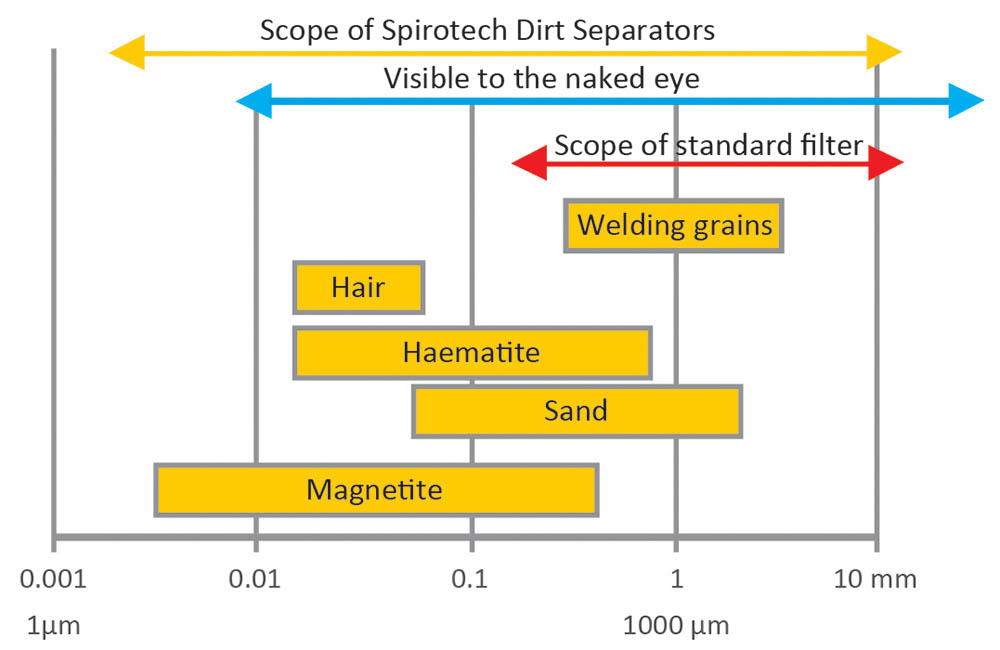
A good dirt separator not only removes the coarse contamination from the system, but also the microparticles. Thanks to a clever internal flow pattern, even very small dirt particles are removed from the water flow and discharged to the collection area.
2. Make use of magnetic separation
Magnetite is one of the biggest polluters in steel installations. By applying a powerful magnet in the dirt separator, you can pull even the finest ferromagnetic particles out of the system water.
3. Choose the right position in the installation
Placement in a strategic place in the system (where the flow is optimal) ensures maximum separation and lasting results.
4. Combine with air and pressure control
Contamination is often caused by corrosion, and corrosion is caused by oxygen. By effectively removing air and properly regulating pressure maintenance, you prevent new microparticles from forming continuously.
The ideal place for a dirt separator in your system
To optimally protect your heating or cooling system, the correct placement of a dirt separator is essential. A dirt separator is preferably installed at the point where the system water enters the heating or cooling unit, usually in the return line.
Why on the return line?
- Here, the water flows back to the (sensitive) system components, such as pumps, heat exchangers and valves.
- Trapping debris at this point will prevent it from causing damage to these crucial parts.
- This not only improves the performance and lifespan of your system, but also reduces the risk of breakdowns and maintenance costs.
With a strategically placed dirt separator from Spirotech, your system stays clean, efficient and protected from contamination, even under the most demanding conditions. This way you ensure a problem-free and durable system.


